
The Police Struggle Over Evidence
The Final CurtainThe homicide team’s procedural conflicts shift from jurisdiction and instinct to a disciplined pursuit of evidence capable of identifying a killer who has erased his traces.
increasing Bearing strength in each event
 decreasing
Bearing strength in each eventdecreasingInstinct Meets Procedure
A Theory Without Authority
Matsumiya’s suspicion
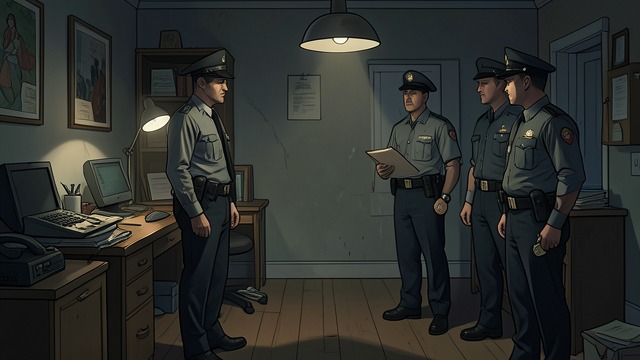
Shuhei Matsumiya sees a possible connection between Michiko Oshitani’s murder and the recent death of an unidentified man near Shinkoiwa. The killings occurred close together in time and place, and the apartment where Oshitani was found feels to him like a home emptied of hope rather than an ordinary residence.
The institutional boundary
Kobayashi and Ishigaki resist treating those impressions as a basis for intervention. A separate precinct already has a task force investigating the burning and death, while Matsumiya has been assigned to travel to Shiga and investigate Oshitani’s history. His superiors acknowledge the observation but insist that he follow the order in front of him.
Matsumiya accepts the procedural limit without abandoning his concern. The tension is between a detective’s instinctive pattern recognition and the institution’s need for verifiable links. He must continue his assigned work while waiting for evidence that can make his theory legitimate to the wider investigation.
The Shiga Assignment
Following the Victim’s Route
A demanding inquiry
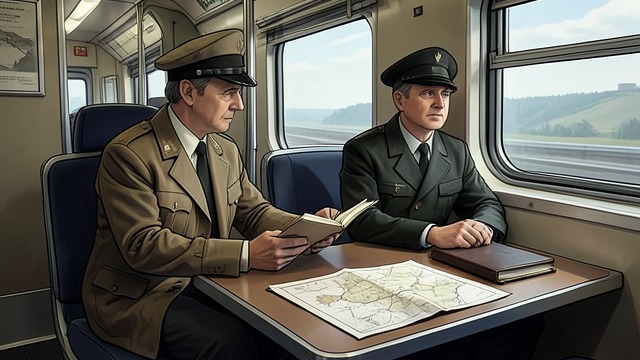
Matsumiya and Sakagami travel to Shiga to interview Oshitani’s employer, coworkers, and clients. Her work required visits to hospitals and care homes, and the number of people she encountered makes the assignment far larger than the detectives had expected.
A useful lead emerges
Most interviews reveal only that Oshitani was generous and competent. At Paradise Village, however, a staff member recalls that Oshitani recognized an older resident as the mother of Hiromi Asai and planned to reconnect with her old friend. The clue gives the trip to Tokyo a personal purpose, but it also introduces a volatile family history.
The assignment’s value comes from persistence rather than a dramatic breakthrough. The investigators find no clear motive in Oshitani’s work, but they establish her likely destination and explain why she sought Asai. A scattered round of interviews has begun to turn a victim’s unexplained absence into a traceable chain of relationships.
A Forensic Reversal
The Cost of a Wrong Assumption
The apparent exclusion
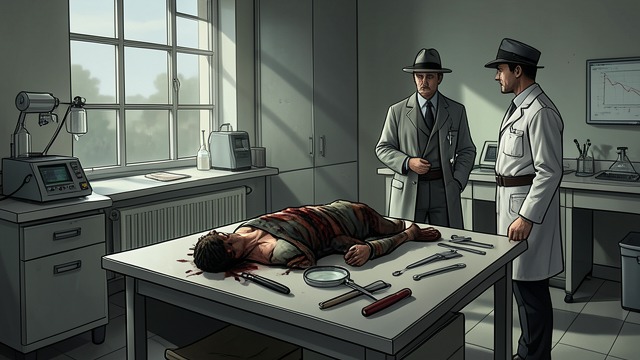
Investigators compare the unidentified burned body with toothbrush, razor, and towel samples from Mutsuo Koshikawa’s apartment. The result seems to show that the man in the shack is not Koshikawa. This weakens Matsumiya’s proposed link just as the team is trying to understand whether the two scenes belong to one case.
A second test
Kyoichiro Kaga points out that a perpetrator could have planted those belongings to divert investigators from the true identity of the body. The team then searches for biological traces in the apartment itself. DNA from the futon and pillow matches the burned corpse, while the original samples match Tanaka, the shack’s actual occupant.
The new result validates the possibility of deliberate staging and forces the task force to revisit its assumptions. The procedure has not failed because forensic science is useless; it has exposed how evidence can be manipulated. The investigation can now connect the murders, but it must treat every apparently simple identification with greater caution.
Credit and Jurisdiction
Help from Outside the Squad
An overlooked contribution
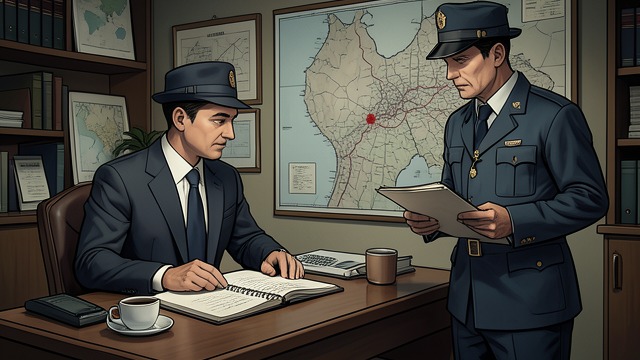
Kaga’s suggestion leads the homicide team to the evidence that joins the Kosuge and Shinkoiwa cases. Matsumiya feels indebted to his cousin but does not publicize that the decisive idea came from a detective outside the task force. The work now advances on several tracks, including the bridge annotations, the victim’s past, and the dead man’s identity.
Collaboration under strain
The task force must decide how much authority Kaga should have in a case that overlaps with his personal history. He has a connection to Shunichi Watabe through his late mother, and his knowledge of Nihonbashi makes him useful. But his private interest could also compromise boundaries or create friction with the investigators responsible for the case.
Kaga is formally brought onto the investigation after a handwriting analysis links his mother’s bridge list with the annotations in Koshikawa’s apartment. The arrangement acknowledges that his contribution cannot be kept informal. At the same time, it makes the personal stakes visible to his superiors and puts his conduct under closer scrutiny.
From Theory to Proof
Evidence Replaces Speculation
The identity question
Investigators pursue records from nuclear-power contractors, old radiation booklets, and witnesses who worked with the man known as Kazutoshi Yokoyama. Those inquiries make an assumed identity plausible but do not yet establish that Yokoyama, Watabe, and Tadao Asai are the same person. The missing records and destroyed business archives leave gaps the police cannot fill by conjecture alone.
Testing the central claim
Kaga’s investigation uncovers a newspaper report about Tadao Asai’s death and obtains a hair sample from Hiromi Asai. The task force orders an official DNA test to establish whether the murdered man was her father. Separately, police continue surveillance as Asai travels to visit the older woman believed to be her mother.
The final approach balances inference with admissible evidence. Kaga’s reconstruction explains how the identities and murders fit together, but the investigation still requires confirmation and a formal account from Asai. By the final performance, the detectives are ready to take her to the station and establish the relationship through testing rather than rely on a persuasive story alone.
At the first task-force briefing after the body is identified
The morning after the task force sends detectives to Shiga
After Kaga challenges the first DNA comparison
After the linked cases are formally recognized
In the final days, as the task force prepares to confront Hiromi Asai
